


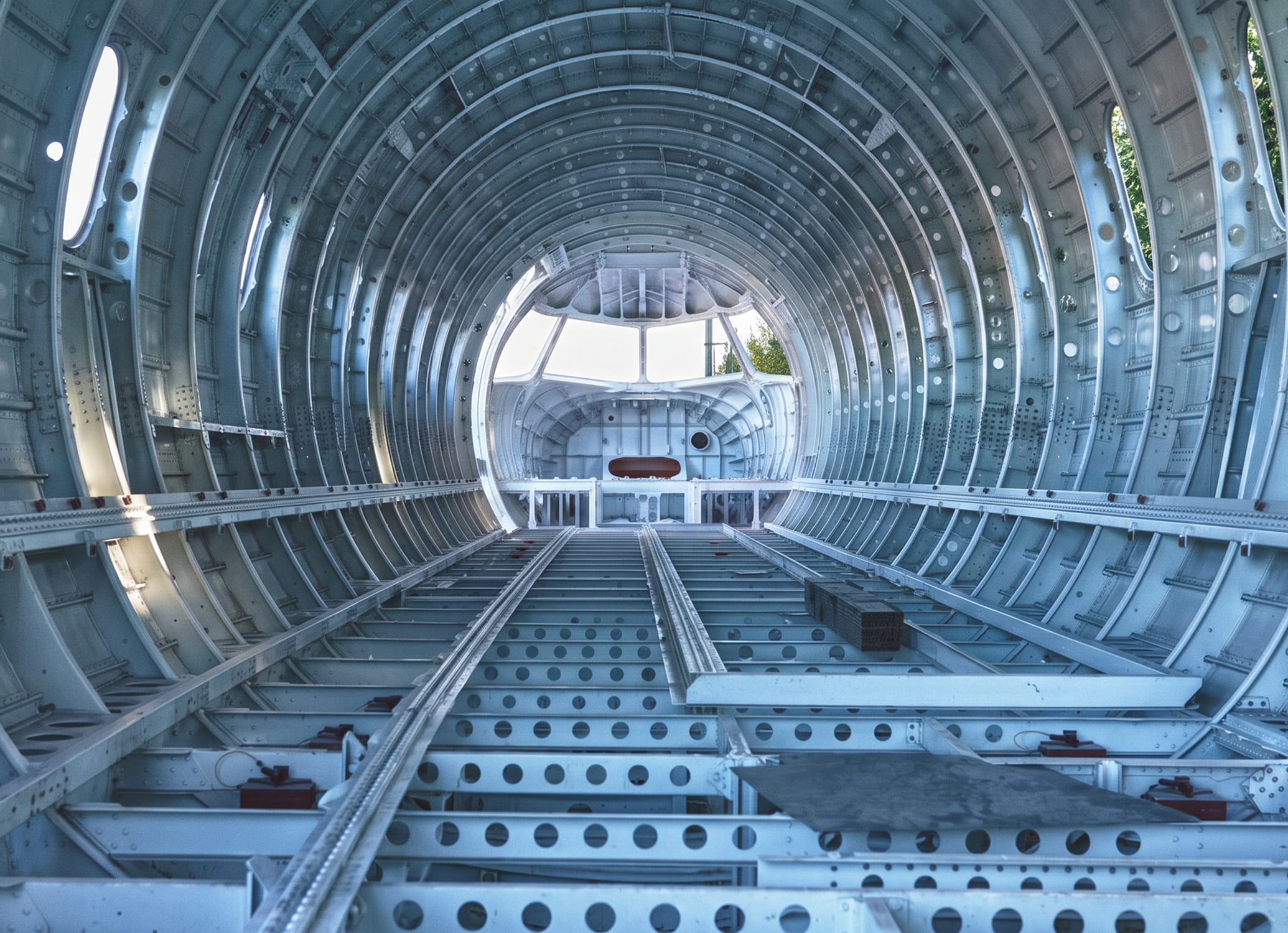
Inside an aircraft, the experience of flight depends partly on components hidden behind the cabin lining. Our work for an aircraft manufacturer brings acoustic and thermal insulation together with moisture management in that space.
Insulation occupies a less visible part of the aircraft. Its components have to fit behind the interior surfaces, where acoustic and thermal functions meet the need to manage moisture. That combination sets the context for this insulation work.
Our aircraft work brings several of those functions into a lightweight insulation kit: acoustic performance, thermal insulation and the drainage of moisture. The engineering question is how they work together in the space available.
Challenge
Insulation has to do its job within an aircraft where weight and space are closely managed. At the same time, moisture needs a route through the system. A useful solution must account for the conditions around the material as well as the material’s insulating properties.
A historical development account for this aircraft program described insulation problems in extreme climates: water ingress, inadequate drainage and poor ventilation. That earlier program provides a useful look inside the engineering problem.
Moisture management changes the questions asked of an insulation kit. Where can moisture go, and how does that route relate to the parts around it? Our current application description makes drainage an explicit function, alongside sound and temperature control. It is a reminder to consider the space around a component as carefully as its insulating properties. The finished kit needs to work within an aircraft, where those requirements occupy the same limited area.
Solution
Bring the functions into one kit
We supply a complex, lightweight insulation system for the aircraft that combines acoustic and thermal functions with moisture drainage. Treating these requirements together gives the kit a clear role within the aircraft: it must insulate while allowing humidity to be managed.
The work is also a continuing engineering relationship. One of our engineers recalls visiting the customer and its factory, getting close to the setting in which the components would be used.
For major aerospace customers, our engineering team describes a substantial amount of work around the product: quotation documents, logistics and quality processes. The technical role connects purchasing, sales, production and quality. That gives the relationship a practical foundation beyond the drawing: the people discussing a requirement need to stay connected to the people making and delivering it.
Understand the moisture path
In the historical concept, the insulation cushions, protective films and supporting profiles were designed together. The films managed moisture movement, while ventilation gaps and vents helped account for conditions around the insulation. These details describe the earlier development program, not a specification for today’s kit.
Below the floor, the earlier concept left drainage paths around closed-cell foam components. Drain openings were adjusted when protective compounds affected water flow. Supports held the insulation without puncturing it for fasteners, combining moisture control with easier assembly and inspection.
Design for the environment around the material
Our wider aviation offering distinguishes the cabin and cockpit from interior technical parts and air-conditioning components. These locations have different geometries and different jobs. Across them, the recurring concerns include mass, service life and the conditions a material must withstand. This is the engineering setting for the insulation kit: the useful question is what a part has to do in its place within the aircraft.
The people developing such a solution also need to understand the customer’s way of working. Our engineers describe learning from customers across several countries and industrial markets. Expectations differ, including how customers organize quality, documentation and delivery. That experience shapes the questions an engineering team asks around a component, helping it connect a technical answer to the organization that will use it.
Connect the technical answer to a dependable supply
The customer relationship adds another layer of work. Our engineering team’s account of major aerospace customers describes heavier documentation and quality processes, as well as the need to deliver reliably. The work involves technical offers, cost calculations, engineering services and the introduction of new processes. Those activities connect a customer’s requirement to something that can actually be manufactured and supplied.
The relationship also depends on continuity. Pinta’s leadership describes a longstanding working relationship with this customer. That is useful context for a program where the component is part of a larger product and questions continue beyond the first delivery. The people on both sides need to be able to discuss the requirement, understand a change and work through it with the relevant technical team.
Results
Results
After more than a year of service experience, the historical development account reported easier installation and inspection and roughly 3 dB of acoustic improvement. These are results from the earlier program, not specifications for today’s kit.
Our aircraft application continues to be described by the functions it brings together: lightweight insulation, acoustic and thermal performance, and moisture drainage. It is the relationship between those functions that makes this an engineering system, from the cabin environment to the way the components fit within the aircraft.
The story reaches from a small drainage detail to a long-running customer relationship. It brings together the conditions behind the cabin lining, the geometry of the installed components and the organization needed to supply them. For someone traveling in the aircraft, that work stays largely out of sight. For the engineering teams, it is where the different demands on insulation have to be reconciled in a system that belongs in the aircraft.
Need to keep cabin moisture under control?
Discuss cabin insulation